Thursday, October 29, 2020

Gone Viral

 October 29, 2020. 


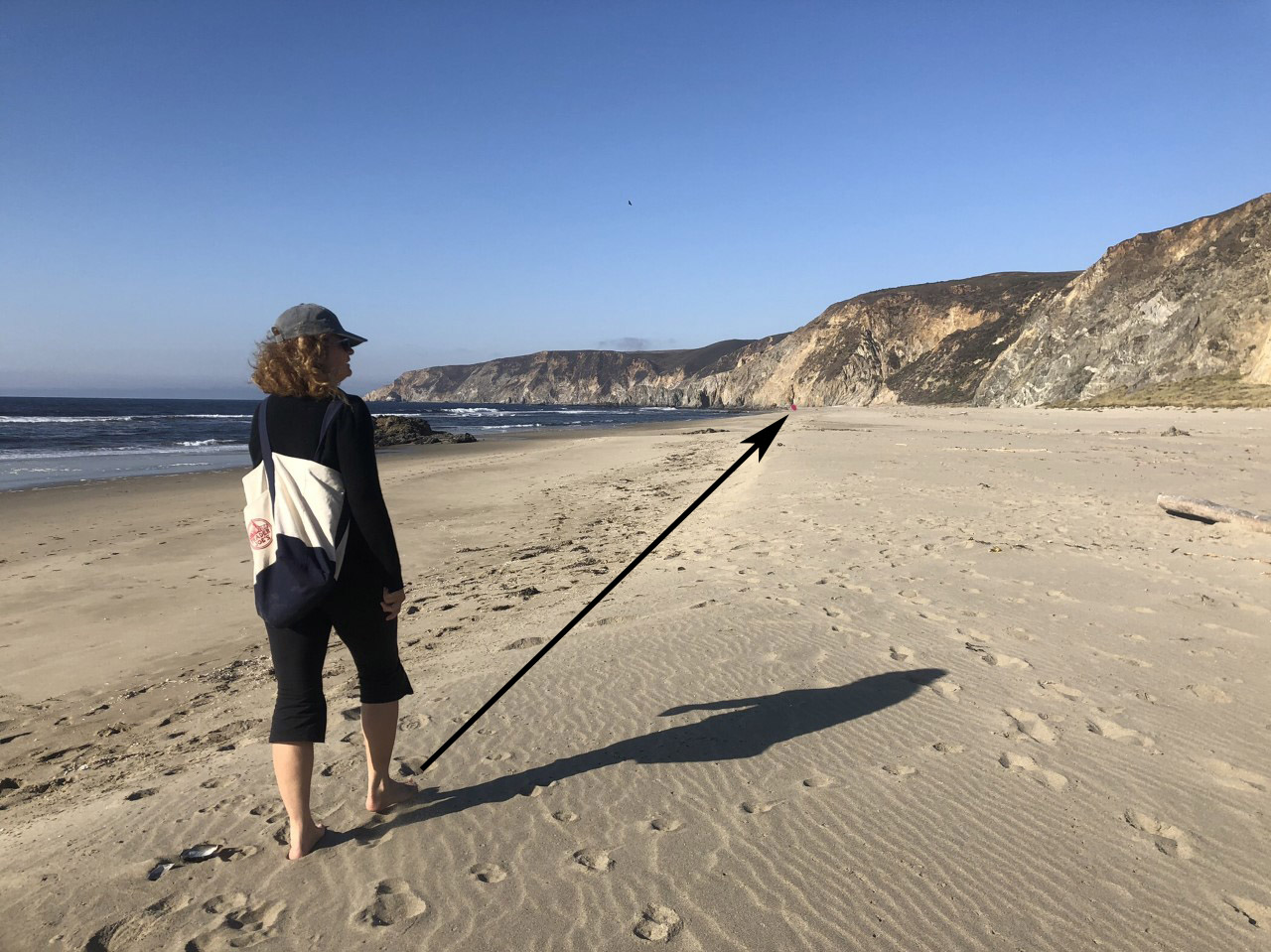
It was a crystal-blue sea and sky day at the beach with nary a piece of plastic to be seen. With or without plastic there is always plenty of camaraderie and conversation with artist extraordinaire Rebecca DiDomenico who was in California to visit family. 


From a distance, a pinkish thing tucked into the sand at the far end of the beach was barely discernible. As I neared, the maroon appendages looked like a supercomputer rendering of the Covid-19 virus where the bright red spikes ring the body of the virus like jewel in a crown. Hence, the name “coronavirus.” 


Confounded, I could not figure out what I was seeing. So bright, so virulent. Is that the virus washed ashore?


Back home, at my computer, my Google search took me to “Belly Flops Octopus” a plastic Kong dog chew toy and yes, it came from China.


It has been a year fraught with tales and blame about where the Covid-19 virus originated and how it rapidly spread person to person, imperiling the entire planet.

A seafood market in Wuhan, China has been hypothesized as the source for the outbreak but recent studies are finding the virus was already in Europe in late 2019.


We’ve grown so accustomed to there being great amounts of plastic on the beach, that we are surprised when there is near none. We fear our successful cleaning will have us putting up the “out-of-business” sign. But, we say, that even one piece of plastic on the beach is one too many. And, in the case today, even one tiny infectious agent, gone viral, is one detrimental gene too many.


Saturday, September 26, 2020

Reading Stones


Book object: Reading Stones

13 plastiglomerate stones in a cloth bag


Plastic may be with us for forever, as in these “reading stones” that were found on Kehoe Beach in the Point Reyes National Seashore. Stones like these are washing ashore onto to beaches everywhere. It is not known how these stones are formed but some scientists believe they are the burnt residue of plastic that was once shipped to Asia for recycling where it was partially incinerated, then accidentally sent adrift.


These stones are evidence of a new geology being formed by melting plastic debris into pyroplastic plastiglomerates. Theses facsimiles of stones are made from polyethylene, polypropylene, along with a smorgasbord of colorants and chemical additives. In these charred remains, as “reading stones” they ask us to decipher our present and future relationship to resource extraction and our dependence on petroleum-based products.


The history of the Earth can be read in the layers of built up sediments. Each stratification offers an insight into a moment in natural history. On the Geological Time Scale, the Anthropocene describes the human impact on the planet, the Age of Oil describes the planetary catastrophe of our petroleum-based consumer culture.


People often do not understand the equation of oil=plastic, but every year thousands of barrels of oil and natural gas are extracted and used to make plastic. That plastic straw in your beverage is extracted fossil hydrocarbons. 


The act of “reading stones” can refer to both the scientific practice of geological investigation and the ritual of lithomancy which seeks to interpret the patterns of stones cast by those wishing to divine the future.


Traditionally in Lithomancy, 13 similar stones were each assigned a symbol: astrological, planetary or elemental then placed in a bag. In a daily ritual, while pondering a question, 3 stones were drawn at random from the bag. From that group a message was read; a meaning was assigned in an intuitive way.


These “reading stones” serve in both capacities:

As a marker of the enduring impact of plastic on the planet.

As a message for the future. 


Take three stones from the bag. Upon inspection you might recognize the charred remains of a toothbrush or a bottle cap; a tuft of rope or a clump of melted single-use plastic bags.

Place these stones in an arrangement that invites a close reading.


Conjure a question that only the stones can answer:


What is it that is being extracted? Is our future as a species being extracted? Is hope itself being extracted? As the most powerful and destructive entity on planet Earth, what can we do?


The stones sing, “let’s face the music and dance.”


Monday, September 21, 2020

Emotional Numbness: the impact of war on the human psyche and ecosystems


Curators Atefeh Khas and Minoosh Zomorodinia write:


"The exhibition focus is the impact of war on environments, and war’s effects on inhabitants of war zones. Recent escalating tensions between Iran and the United States is creating an increase in anxiety about potential war between these countries. Thus, the goal of the exhibition is to create a platform to share, meet, discuss, and cross borders, by exhibiting art which considers the impacts of war and the varying relationships between Iran and the United States. We believe art has the ability to affect perceptions, develop meaningful dialogue, and bring awareness about critical issues to the public."


September 18 - October 16, in Tehran, Iran at Platform 3

To see one of our prints on the wall in Tehran and then to see gallery visitors looking close was a thrill beyond compare. Yes, Tehran... the perfect place to present one of our beach plastic soldier portraits from our series The True Cost of Plastican exhibition that explicates the oil=plastic equation and the impact of war.

For a virtual walk-though of the exhibition. HERE.

Tuesday, September 1, 2020

Happy Coastal Cleanup Month!!!


Coastal Cleanup Day has traditionally been on the third Saturday of September. This year, instead of large cleanup gatherings, people are encouraged to cleanup on their own, close to home, any Saturday in September. 

These days we’ve been challenged with beach closures and exhibition cancellations, but thanks to Jill Lessard, Evan Johnson and the great team at the Marin Community Media Center, the show will go on. 


To celebrate Coastal Clean Up 2020 we created Virtual Fiesta a virtual show of what we would have had on display at the CMCM offices (Sept 1-Oct 31) and have scheduled programs about the ocean/beach/plastic, Time and Tide that will air at 5:30 PM on Saturdays Sept 5,12,19, 26. Programs can be viewed on Comcast 26 in San Rafael, AT&T 99 in California, or online https://cmcm.tv/livecommunity


September 5 will kick off with Chris Jordan's remarkable feature film Albatross. During the month several NOAAshorts along with a couple of pieces about Cordell Bank National Marine Sanctuary will air. Ocean Recovery Alliance in Hong Kong and Ocean Conservation Research in Lagunitas also contributed stories.


For more about Coastal Cleanup 2020, every Saturday in September:

https://www.coastal.ca.gov/publiced/ccd/ccd.html


For more about Virtual Fiesta: 

https://www.marinarts.org/event/local-virtual-fiesta-a-virtual-art-gallery-exhibit/


For more about One Beach Plastic: 

https://www.beachplastic.com


Thanks for tuning in!


Stay safe.

Stay true.


Monday, June 22, 2020

Sweet and Sour


The conclusion of an exhibition always brings to the fore what we call the “sweet and sour” —  the joy of the showing/sharing (sweet) and the sad (sour) of putting everything in a box then back into the barn/studio.

The Great Wave was composed of powerful images with promise for the health of our oceans. Thanks to curator Ann Trinca there was a great line up of artist activists: Brandon Anderton, Tess Felix, Peter Hassen, Liz Hickok (and collaborators Jamie Banes and Phil Spitler), Hughen/Starkweather, Luc Janssens, Josh Keyes, Richard and Judith Lang, Courtney Mattison, Allison Watkins and Angela Willetts. Thanks to Mirka Knaster for her insightful review Art About and for the Ocean.

Unfortunately, because of the Coronavirus pandemic the City of Walnut Creek had to close all city agencies before the show’s end date so no events could take place in the gallery while the order was in place.

Now, months later, restrictions are finaly being lifted and we were able to pick up our work. When we arrived, the gallery was stacked with packing boxes, in the mess of transition with the deinstall of The Great Wave and the install of Grid Nest Nature opening on July 12 with new visitor guidelines, with timed entry.

It is has been and continues to be a fraught time but artists and galleries are learning to navigate during this turbulence. With a measure of good luck, good health and with the upwelling of interest in plastic pollution, we are grateful to continue to ride the waves.

We are struck by the rightness of Hokusai's enduring image — tiny fishermen holding fast in their small boats against the tumult of that gigantic wave, all the while Mt. Fuji forever and strong. 


Friday, June 12, 2020

Abrigado


These days with so many big issues vying for attention we were afraid that the Oceans might get short shrift on World Oceans Day. With beaches just beginning to open up and with programming shifted to online, we feared that audiences might be distracted and not tune in.

Route Global in Brasil, Portugal and the USA is an international NGO focused on beach clean-ups, education and ocean advocacy that uses art as an activator. To celebrate World Oceans Day, they did an awesome job of organizing 3 days, June 6-8, of panel discussions with some 24 ocean related topics. And people tuned in — they watched and commented on chat and sent emojis.


The programs were recorded and are now archived on The Ocean Day YouTube channel. 

When Rubem Miranda from Route USA and Simão Filippe Route Brasil asked if we would be on a panel themed Blue Vision we were thrilled. Our cohorts included Mauro Figueiredo,(from Brasil but zooming in from Australia) a doctor in environmental law and one of those responsible for writing the law of the sea in Brasil, Sebastian Copeland (from Munich) an adventurer and fine art photographer, Captain Charles Moore (from Long Beach) who discovered the Pacific Garbage Patch and Barbara Veiga (from Amsterdam but zooming in from London) photographer and co-founder of the League of Women Across the Oceans. We were honored to be featured with such an esteemed group of ocean experts.


During the discussion we were reminded of and introduced to many ideas that are worthy of further investigation. Here are links to just a few of the mentions: 
Fritjov Capra: PDF of The Tao of Physics  about the parallels between physics and Eastern mysticism. 
Amsterdam re-envisions its public policy based on the doughnut economy.
We have long admired Captain Moore for his pioneering work in oceanography and his commitment to environmental education but we just learned about his interest in Urban Gardening. We share this love of gardening on our RanchoD blog.  
James Lovelock author of the GAIA theory 
Surfers are establishing Surfing Reserves to protect coastlines. 
M.S. Merwin's poem Place.


Obrigado to Route Global for a job well done!

Thursday, June 4, 2020

Enough!


Although we have been staying home, only going out every 10-14 days for essential supplies, when we got the news about a march in Point Reyes Station in protest against race-based violence after the killing of George Floyd and countless others, without hesitation, we painted our signs (after a consult with Amelia about messaging) and headed out.

Over the years we have attended many marches in front of the Wells Fargo Bank but this march to protest racism and police brutality, even in spite of the sheltering and distancing restrictions, had the biggest crowd ever.

We are so proud to stand together (6’ apart) with our neighbors and friends.

We were brought to tears with the chant Say Their Names then the roll call and response with the hundreds of names of people who have been killed by police. It really brought to heart that #Black Lives Matter and that each and every victim of police violence is an individual human being with a name.